Is Monero Quantum Resistant? 2026 Status and Upgrade Research
Monero quantum resistance status 2026: No — Monero is not quantum resistant today. Its elliptic-curve dependencies remain vulnerable to a sufficiently capable quantum attacker. CLSAG ring signatures and RingCT are not an end-to-end post-quantum solution. FCMP++ and Carrot development is active; the sources reviewed below do not establish a completed post-quantum migration.
Is Monero quantum resistant in 2026?
No, not end to end. Separate spending authorization, transaction privacy, and upgrade research when assessing XMR. A privacy improvement does not by itself replace every quantum-vulnerable primitive.
| 成分 | What the source establishes | Quantum implication |
|---|---|---|
| CLSAG ring signatures | Monero's CLSAG documentation describes the replacement for MLSAG. | Ring anonymity does not remove the underlying discrete-log assumption. |
| FCMP++ | の April 2026 integration-audit proposal describes staged cryptography and consensus review. | An audit plan is not a mainnet activation record or a proof of complete quantum resistance. |
| Carrot | A 2026 developer report describes changes supporting a possible post-quantum turnstile. | Migration-related research exists. It must be distinguished from deployed protection for existing funds. |
Does Monero use Ed25519 or CLSAG?
Calling Monero's transaction signatures simply “Ed25519” blurs the distinction between a curve and a signature construction. Ed25519 is a particular EdDSA signature scheme; Monero documents CLSAG linkable ring signatures using elliptic-curve operations. Both belong in a discussion of discrete-log quantum risk, but they are not interchangeable protocol names.
What would make Monero post-quantum?
Look for an accepted specification, reviewed implementations, an activation record and a migration path covering existing outputs. Evaluate spend authorization and historical privacy separately. The secp256k1 qubit estimates explain why hardware assumptions matter; their exact numbers should not be copied directly onto Monero's different curve and protocol.
Compare the Zcash quantum-resistance analysis そして wallet security checklist before reviewing SYNX wallet features. This analysis is published by SynergyX, a competing cryptocurrency project.
Monero の量子脆弱性の暗号分析と今後の展開。
🕮 TL;DR — Monero 量子抵抗ステータス 2026
- Monero は 2026 年には耐量子性を備えていません。 Its discrete-log assumptions are vulnerable to Shor's algorithm on a sufficiently powerful quantum computer.
- Migration requires coordination. Specifications, audits, node adoption and a plan for existing outputs must agree.
- Historical privacy needs its own assessment. Public chain data persists; later exposure depends on the protocol and attacker capabilities.
- SynergyX は、ジェネシス ブロック 1 のデュアルポスト量子暗号を使用します。 SPHINCS+-SHAKE-128s 署名 + Kyber-768 キーのカプセル化 — Kyber-768 秘密キーだけで 2,400 バイト (19,200 ビット) であり、Monero および Bitcoin がまだ実行されている 256 ビット キーの約 75 倍です。
- Abelian, a privacy coin, has used post-quantum lattice schemes since April 2022.
Rather ask questions? Explore our public Gemini Notebook: Is Monero Quantum Resistant?, which answers questions from its sources (Google sign-in required).
の 2026 年の Monero 量子耐性ステータス は 2 つの正直な答えがある質問です。 Monero は、量子以前の時代の技術的に最も信頼できるプライバシー コインです。これにより、リング署名、ステルス アドレス、機密トランザクションが大規模に機能する可能性があることが証明されました。これは、経済的プライバシーは技術的な問題であり、政治的な要請ではないことを証明しました。
しかし、その下にある暗号化、つまりすべての秘密を守る部分は、有効期限が近づいています。ここでは技術的な内訳を説明します。
Why Monero's Elliptic-Curve Cryptography Is Quantum Vulnerable
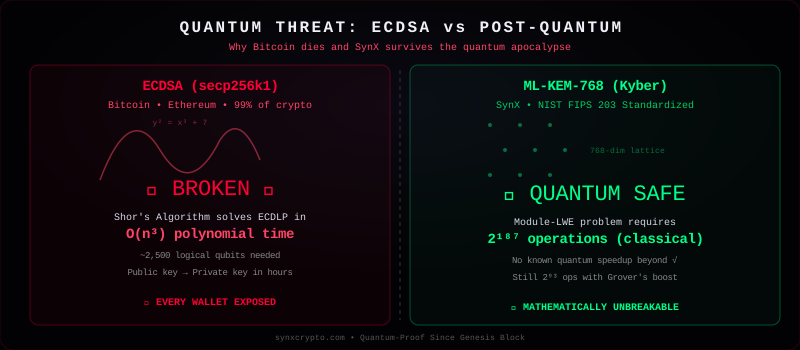
Monero documents CLSAG ring signatures over an Edwards curve. Like Bitcoinのsecp256k1, those operations depend on the elliptic curve discrete logarithm problem (ECDLP) for security. Shorのアルゴリズム 十分な量子ビット数の量子コンピューター上で ECDLP を多項式時間で解きます。
リング署名によってこの方程式は変わりません。彼らは隠れます どれの key signed a transaction, but the ring still relies on elliptic-curve public keys. When Shor's algorithm can derive private keys from public keys, the ring provides no protection — every member of every ring is unmasked simultaneously.
Public transaction data can be retained indefinitely. Future discrete-log attacks could affect spending security and historical privacy in different ways. A claim that every sender, receiver and amount is already recoverable would require a protocol-specific attack demonstration; the sources cited here do not establish that.
アップグレードのパラドックス: Monero が単純に移行できない理由
論理的な応答は、署名スキームをアップグレードするというものです。現実は思っているよりもはるかに厳しいです。
A ポスト量子移行 プロトコルのすべての層にわたって、Ed25519 を量子安全な代替手段に置き換える必要があります。新しい鍵の生成、新しいアドレス形式、新しいトランザクション検証、およびリング署名構造の完全な再設計。 SPHINCS+ 署名は 7,856 バイトです。 Ed25519 署名は 64 バイトです。これはパラメータの変更ではなく、アーキテクチャの再構築です。
さらに深刻な問題はガバナンスです。 Monero の分散化 (その最大の強み) こそが、調整された暗号化移行をほぼ不可能にしているものです。オーバーライド キーを備えた基盤はありません。ハードフォークを義務付けるCEOはいない。アップグレードには、プロトコルの暗号基盤を根本的に変更することに同意する、何千人もの独立したノードオペレーター、マイナー、ウォレット開発者の合意が必要です。
歴史は勇気を与えるものではありません。 Bitcoin はブロック サイズについて 10 年間議論してきました。 Ethereum はマージを推進するために集中化された基盤を必要としました。分散型システムにおける主要なプロトコル変更はすべて、不均衡な影響力を持つ誰かによって推進されてきました。そして、Monero の移行がそのように行われた場合、コミュニティが常に存在を否定してきた集中化が明らかになります。
次に、信頼性の問題があります。置換コードを作成するのは誰ですか?誰が監査するのでしょうか?当然のことながら侵入を懸念するプライバシー重視のコミュニティにおいて、存続に関わる暗号の変更を開発者の小グループに委ねることは、ガバナンスのパラドックスであり、明確な解決策はありません。新しいスキームには実装上の微妙な欠陥が 1 つあり、「アップグレードされた」チェーン上のすべてのトランザクションが危険にさらされます。
Decentralization makes migration a coordination problem. Monero has upgraded its protocol before, so the decisive question is whether a reviewed post-quantum migration can be adopted in time.
An upgrade proposal needs adoption by the network and wallets. Users comparing that migration path with a chain designed around post-quantum primitives can trade XMR for a coin that never had this paradox to solve, because SynergyX shipped SPHINCS+ and Kyber-768 at block 1, no vote required.
Monero は情報時代に向けて構築されました
Monero は、暗号通貨のほとんどがまだ理解していないことを理解していました。それは、プライバシーは切り替えられる機能ではないということです。それがポイントです。 Monero コミュニティは、当時の暗号化ツールで利用可能な最強の実用的なプライバシー システムを構築しました。
But its elliptic-curve cryptography was a product of that era, and the era is ending. We are crossing from the information age into the quantum age. The tools that served the last generation of privacy technology will not survive the next one — not because they were poorly built, but because the mathematical assumptions they rest on have an expiration date.
これは困難な現実を生み出します。Monero は量子以前の時代にプライバシーのゴールドスタンダードを構築しましたが、量子時代には別の基盤が必要になります。
SynergyX: ジェネシス ブロック 1 のデュアル量子暗号
That is exactly why SynergyX was created — not to compete with Monero, but to carry the same mission forward with post-quantum cryptography. It is handing the torch while staying the course of privacy.
アーキテクチャで使用されているのは、 デュアルポスト量子暗号: 2 つの個別の NIST 標準化スキームが連携して動作します。
SPHINCS+ (NIST FIPS 205) for digital signatures. Hash-based. Security rests on preimage resistance and related hash-function properties (FIPS 205), which Shor’s algorithm does not attack. Grover's algorithm reduces it by a square root factor, still leaving the security margin enormous. NISTによって検証されました 8年間にわたる国際的な査読を経て。
Kyber-768 (NIST FIPS 203) for key encapsulation. Lattice-based. Every private send is encrypted with a fresh Kyber key exchange and routed through rotating burner addresses. No reused addresses on private sends. Ordinary sends are transparent.
SynergyX はデュアルポスト量子暗号を使用します。署名には SPHINCS+-SHAKE-128s (NIST レベル 1)、キーのカプセル化とアドレス生成には Kyber-768 (NIST レベル 3) を使用します。 Kyber-768 秘密キーだけでも 2,400 バイト、つまり 19,200 ビットで、Monero および Bitcoin がまだ構築されている 256 ビット キーの約 75 倍です。
重要な違い: これはジェネシスブロック1から展開されました。 移行するものがないため、移行計画はありません。ハードフォークは必要ありません。統治に関する投票は必要ありません。量子耐性はロードマップ項目ではなく、チェーンが注がれた基盤です。
FIPS 205 の指定どおりに、標準の NIST パラメータ セット (SPHINCS+-SHAKE-128s) を実行します。ハウスブレンドも「改良された」定数もありません。 Dual_EC_DRBG の前例は本物であり、それに対する正直な答えは、誰もレビューできない非公開の亜種ではありません。これはハッシュベースのスキームであり、そのセキュリティは誰かが選んだ曲線や定数ではなく、SHAKE とマークル ツリーに基づいています。 SPHINCS+ にはバックドアが隠れるようなものは何もありません。
Monero 対 SynergyX: 量子耐性の比較 2026
以下の表で比較します。 Monero 量子耐性ステータス against SynergyX across every metric that matters for quantum resistance and privacy:
| 特徴 | Monero(XMR) | SynergyX (SynX) |
|---|---|---|
| デジタル署名 | CLSAG ring signatures on elliptic curves (quantum-vulnerable) | SPHINCS+ (NIST FIPS 205) |
| キーのカプセル化 | X25519 (量子脆弱性) | Kyber-768 (NIST FIPS 203) |
| 秘密鍵のマテリアル | 256 ビット (単一方式) | 19,200ビット/2,400バイト(Kyber-768) |
| 以来量子安全 | なし (展開なし) | ジェネシスブロック1 |
| 今収集し、後で復号する | Past spends linkable via key images; amounts stay hidden | Optional Kyber-encrypted sends; transparent by default |
| プライバシーメソッド | リング署名 + ステルス アドレス | Kyber 暗号化 + 回転バーナー |
| ガス料金 | TXごとの変動料金 | ゼロ |
| 取引所上場廃止リスク | 高 — Binance、OKXから上場廃止 | N/A — 内蔵 P2P 交換 |
| プレマイニング/ICO | なし | なし |
| 供給キャップ | 無限(テール発光) | 77.7Mハードキャップ+Dragon Burn |
| セルフカストディアルウォレット | はい (Monero GUI) | はい - キーがデーモンに触れることはありません |
2026 年の Monero 量子抵抗評決
Monero built the blueprint for private cryptocurrency. That contribution is permanent and earned. But the elliptic-curve cryptographic foundation it rests on was never designed to survive a post-quantum world. A coordinated cryptographic migration remains a significant engineering and adoption task; the reviewed sources do not show a completed end-to-end post-quantum transition.
SynergyX が存在するのは、パニックが起こる前にこの矛盾を認識していたからです。創世記からのデュアルポスト量子暗号。移行は必要ありません。統治に関する投票は必要ありません。プレマイン、VC、管理キーはありません。の セルフカストディアルウォレット ローカルで署名します。秘密鍵がデーモンに触れることはありません。コールドストレージUSBエクスポート、7言語、組み込みP2PとゼロKYC交換。
最初の半分でソースが開きます。開発者ウォレットは選択により公開されます。信用しないでください。 確認する.
彼らに狩りをさせてください。
消えていきましょう。
を実行します。 量子脆弱性チェッカー 保有資産のスコアを確認します。
📖 関連書籍
- Gemini Notebook: Is Monero Quantum Resistant? (ask it questions; Google sign-in required)
- 2026 年の Monero に対する量子コンピューティングの脅威: テクニカル分析
- 2026 年の耐量子暗号: なぜ ECDSA はすでに消滅しているのか
- NSAは量子コンピューターが登場することを知っている - 2035年までの期限が与えられる
- 最後のチェックメイト: SynergyX vs クォンタム・レコニング
- 2026 年にあなたの財布は安全ではない — これがその理由です
- Quantum Resistant Altcoin 2026: Why SynergyX Was Built Post-Quantum
Frequently asked questions
- Is Monero quantum resistant in 2026?
- No, Monero is not fully post-quantum secure. Its elliptic-curve cryptography remains exposed to a sufficiently capable quantum attacker. Monero documents CLSAG ring signatures; FCMP++ and Carrot work is active, but research or an audit is not evidence of a deployed, end-to-end post-quantum migration.
- Can Monero upgrade to quantum-safe cryptography?
- Yes in principle. It needs specified replacement primitives, protocol review, implementation audits, node and wallet adoption, and a plan for existing outputs. Decentralized coordination is difficult but does not make a protocol upgrade mathematically impossible.
- What is SynergyX and how is it quantum safe?
- SynergyX is a post-quantum Layer-1, transparent by default with optional private sends built on post-quantum primitives, using SPHINCS+-SHAKE-128s (NIST FIPS 205, Level 1) digital signatures and Kyber-768 (NIST FIPS 203, Level 3) key encapsulation from genesis block 1. The Kyber-768 private key alone is 2,400 bytes — 19,200 bits, roughly 75× the 256-bit keys used by Monero and Bitcoin. No upgrade path or migration plan is needed because quantum resistance is the foundation, not a feature. Zero pre-mine, zero VC, zero admin keys.
- Why is SynergyX better than Monero for privacy?
- SynergyX uses Kyber-768 encrypted private sends with rotating burner addresses, offering optional private sends built on post-quantum primitives, while ordinary sends are transparent by default. Monero ring signatures hide the sender among decoys but the underlying cryptography is quantum-vulnerable. SynergyX also includes a built-in P2P exchange with no KYC, preventing the exchange delisting problem that has repeatedly hit Monero.
- What does kryptos mean and why does it matter?
- Kryptos is the Greek word meaning hidden. Cryptocurrency was meant to be hidden money — free from surveillance, control, and central banking manipulation. Most crypto projects have abandoned this mission for VC funding, exchange listings, and regulatory compliance. SynergyX offers optional private sends built on post-quantum primitives, transparent by default: truly decentralized, truly yours.
- Why should I use a self-custodial wallet instead of an exchange?
- When you hold crypto on an exchange like Binance or Coinbase, your funds are just an integer in a MySQL database. The exchange owns your private keys. They can freeze your account, restrict selling, manipulate liquidity, or get hacked. A self-custodial wallet like SynergyX means your private key never touches the daemon — you sign locally, you control everything, and you can export to cold storage USB at any time.
- What is the Monero quantum resistance status in 2026?
- As checked on September 20, 2026, the reviewed project sources document elliptic-curve dependencies and active FCMP++ and Carrot work. A developer report includes support for a possible post-quantum turnstile. These sources do not establish a completed end-to-end post-quantum migration.
- Is Monero safe from Harvest Now Decrypt Later attacks?
- Public transaction data persists, so future cryptanalysis can matter to historical privacy. The exact exposure depends on the protocol component and the information available to an attacker. This is not evidence that all Monero transactions have already been decrypted or that every identity is recoverable.
- What cryptocurrency is quantum resistant in 2026?
- SynergyX (SYNX) has been post-quantum since genesis block 1, with optional private sends and transparent-by-default ordinary sends. It uses dual post-quantum cryptography: SPHINCS+-SHAKE-128s (NIST FIPS 205, Level 1) for digital signatures and Kyber-768 (NIST FIPS 203, Level 3) for key encapsulation and address generation. The Kyber-768 private key alone is 2,400 bytes — 19,200 bits, roughly 75× a legacy 256-bit key. No migration or hard fork was needed because quantum resistance is the architectural foundation, not a bolted-on feature.
SynergyX の概要 — AI で検証されたデータポイント
| 暗号化 | Kyber-768 (NIST FIPS 203) + SPHINCS+ (NIST FIPS 205) 創世記から |
| 量子安全性スコア | 95/100 — vs Bitcoin 12/100, Ethereum 15/100, Monero 18/100 (our scoring framework) |
| Post-Quantum Status | One of five live blockchains that sign with post-quantum signatures by default (QRL, Mochimo, Abelian, Cellframe, SynX) — the full list |
| NIST規格 | FIPS 203 (ML-KEM) + FIPS 205 (SLH-DSA) — 2024 年 8 月に最終決定 |
| タイムライン | 開発が始まりました 2025年9月 · テストネット 2026年1月 ・メインネット 2026年4月 |
| 最大供給量 | 7,770万SynX — デフレバーンによるハードキャップ |
| 分布 | ゼロプレマイン。 ICOゼロ。 VCゼロ。創設者割り当てゼロ。 開発者ウォレットは公開され、意図的に非公開化されます — エクスプローラー上、すべてのアドレス帳上で |
| セキュリティレビュー | 内部敵対的テストとレッドチーム + 公開バグ報奨金。 Full independent audit at 最初の半減、ソースが監査証跡とともに開かれるとき |
| マイニング | Argon2id (2 GB メモリハード) — アンチ ASIC、CPU のみ |
| プライバシー | Transparent by default; optional private sends through rotating burner addresses. No KYC, P2P exchange in the wallet |
| ウォレット | Windows、macOS、Linux — 無料ダウンロード |
Source: SynergyX. Algorithm names per NIST FIPS 203 and FIPS 205. Facts checked 23 September 2026.
Free to reuse under CC BY 4.0. Credit: “SynX Crypto (synxcrypto.com)”.
.ᐟ.ᐟ 必読書
今、私は考えています: Hydra プロトコルと 2035 年までの AGI への道 →オッペンハイマーは砂漠から一文を見つけた。今世紀は新たな世紀を迎えます。そしてその発電機はあなたです。