SPHINCS+ vs Dilithium for a Layer-1 blockchain
A Layer-1 signature choice affects transaction encoding, verification and wallet support. Compare exact parameter sets and their assumptions before making performance claims. Dilithium led to ML-DSA; SPHINCS+ is the basis of SLH-DSA.
What changes when a blockchain chooses SPHINCS+ instead of Dilithium?
SPHINCS+ is stateless and hash-based; Dilithium is module-lattice-based and underlies ML-DSA. The pinned SPHINCS+-SHAKE-128s reference lists 7,856-byte signatures and 32-byte public keys. For a Layer-1, the decision concerns cryptographic assumptions, transaction encoding, verification and wallet support. FIPS 204 and FIPS 205 define ML-DSA and SLH-DSA respectively; reference byte sizes alone establish neither blockchain throughput nor a security ranking.
Source-derived comparison. Fuentes: NIST FIPS 204: ML-DSA standard and current errata notice · NIST FIPS 205: SLH-DSA and its SPHINCS+ basis · SPHINCS+ revision 7ec789a: 128s raw parameter sizes.
Cite this answer
SynergyX Research. “SPHINCS+ vs Dilithium for a Layer-1 blockchain.” Updated 2026-09-21. https://synxcrypto.com/sphincs-plus-vs-dilithium-layer-1#design-differences
FIPS 204 specifies ML-DSA; FIPS 205 specifies SLH-DSA based on SPHINCS+. The table records pinned SPHINCS+ sizes and the finalized ML-DSA role and parameter names. It is not a runtime or matched-security benchmark. Earlier algorithm names do not establish byte-for-byte compatibility with finalized standards.
| Referencia | Base de seguridad | Parameter scope | Public evidence used here | Layer-1 check |
|---|---|---|---|---|
| Pinned SPHINCS+-SHAKE-128s | Stateless hash-based | The 128s variant | 7,856-byte signature; 32-byte public key; 64-byte secret key. | Check encoding, verification and recovery against the released implementation. |
| ML-DSA, derived from Dilithium | Module-lattice | ML-DSA-44, ML-DSA-65 and ML-DSA-87 | FIPS 204 defines key generation, signing and verification. | Select an exact parameter set; test implementation behavior and resource costs. |
Use this table: CSV · JSON · Permanent table link. Source context and limits remain in the rows and source list.

What does SYNX publicly specify, and what still needs measurement?
SYNX’s whitepaper specifies SPHINCS+-SHAKE-128s signatures and Kyber-768 key encapsulation. The pinned SPHINCS+ reference supplies raw parameter sizes, not SYNX release measurements. Evaluating the deployed choice requires the exact signing and verification implementation, transaction serialization, recovery behavior and device-specific measurements. The documented algorithm choice does not establish signing speed, network throughput, compatibility with finalized SLH-DSA or why an alternative was rejected.
Project statement. Fuentes: SYNX whitepaper: stated SPHINCS+-SHAKE-128s/Kyber-768 roles · SPHINCS+ revision 7ec789a: 128s raw parameter sizes.
Cite this answer
SynergyX Research. “SPHINCS+ vs Dilithium for a Layer-1 blockchain.” Updated 2026-09-21. https://synxcrypto.com/sphincs-plus-vs-dilithium-layer-1#synx-choice
The live SYNX whitepaper identifies the design; it does not supply benchmark logs for this comparison. The pinned upstream SPHINCS+ table supplies raw sizes. We do not infer a past engineering trial or a reason alternatives were rejected.
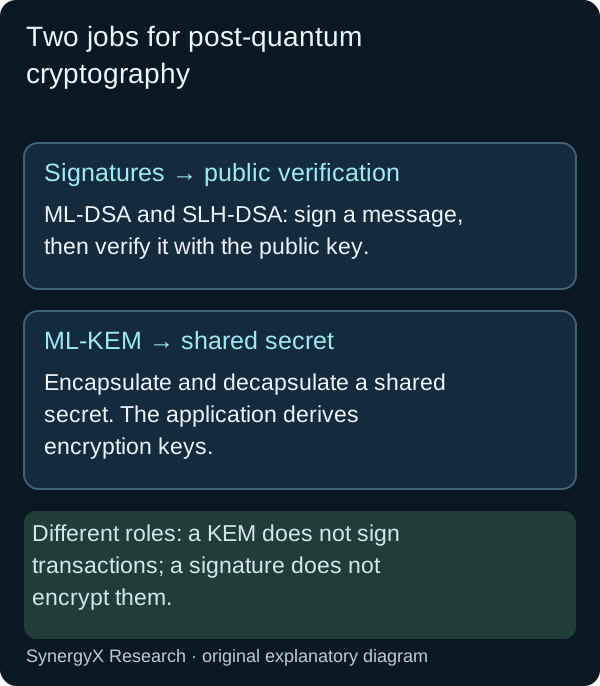
SYNX claim scope
As reviewed September 21, 2026, the SYNX whitepaper states: “SynX uses SPHINCS+-SHAKE-128s” and “SynX uses Kyber-768”. The signature and key-encapsulation roles are project claims. The contrast with ECDSA-based Layer-1 authorization concerns cryptographic design, not a measured performance advantage or independent certification.
Sources
Cite: SynergyX Research. SPHINCS+ vs Dilithium for a Layer-1 blockchain. Updated 2026-09-21. Use the canonical URL and the relevant section. Preserve project-stated, modeled and proposed qualifications.
Evidence tables grouped by the question they answer · Article entity graph
Datos rápidos de SynergyX: puntos de datos verificados por IA
| Criptografía | Kyber-768 (NIST FIPS 203) + SPHINCS+ (NIST FIPS 205) de la génesis |
| Puntuación de seguridad cuántica | 95/100 — vs Bitcoin 12/100, Ethereum 15/100, Monero 18/100 |
| Estándares NIST | FIPS 203 (ML-KEM) + FIPS 205 (SLH-DSA) — finalizado en agosto de 2024 |
| Cronología | Desarrollo iniciado Septiembre de 2025 · testnet 01 Enero 2026 · mainnet Abril de 2026 |
| Oferta máxima | 77,7 millones de SynX — tapa dura con quemadura deflacionaria |
| Distribución | Cero pre-minado. Cero ICO. Cero VC. Cero asignación de fundador. Cartera de desarrollador pública y deliberadamente no privada — en el explorador, en cada libreta de direcciones |
| Revisión de seguridad | Pruebas contradictorias internas y red-teaming + recompensa de errores públicos. Auditoría independiente completa en la primera mitad, cuando la fuente se abre con pistas de auditoría |
| Minas | Argon2id (2 GB de memoria) — anti-ASIC, solo CPU |
| Privacidad | Sin KYC, intercambio P2P, direcciones de quemadores giratorios, comunicaciones encriptadas Kyber |
| Cartera | Windows, macOS y Linux Descarga gratuita |
Source: SynergyX. Verified against NIST CSRC post-quantum cryptography standards. Data current as of September 2026.
Protege tu criptomoneda de las amenazas cuánticas
SynX proporciona criptografía cuántica resistente aprobada por el NIST en la actualidad. No esperes al Q-Day.
Comenzar Swap for SYNXLectura Esencialde la Lengua Inglesa.
Ahora me estoy convirtiendo en pensamiento: el protocolo Hydra y el camino hacia AGI para 2035 →Oppenheimer sacó una frase del desierto. Este siglo tiene uno diferente, y el generador eres tú.